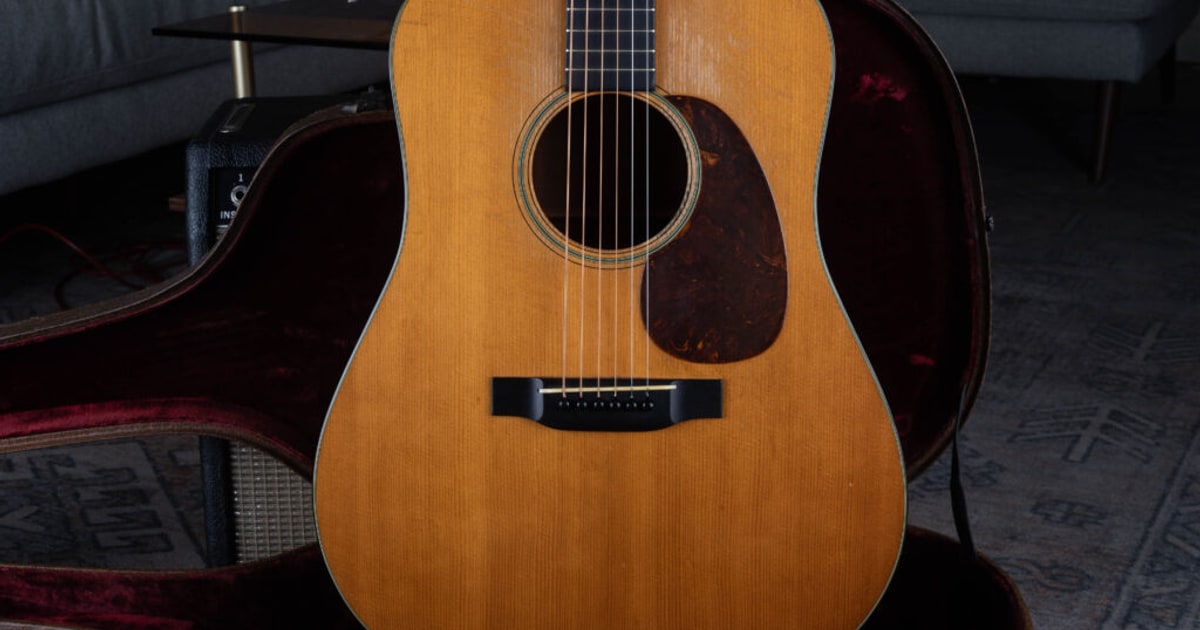
Vintage Martin D-18: History, Specs, Dating & Value
A detailed guide to Martin D-18 history, specifications, year-by-year construction changes, bracing, authentication, variants, collectibility, and vintage values.
Read moreJoe's Vintage Guitars Blog
Deep-dive authentication and spec guides for individual vintage models: year-by-year details, originality checks, and what collectors look for.

A detailed guide to Martin D-18 history, specifications, year-by-year construction changes, bracing, authentication, variants, collectibility, and vintage values.
Read more →
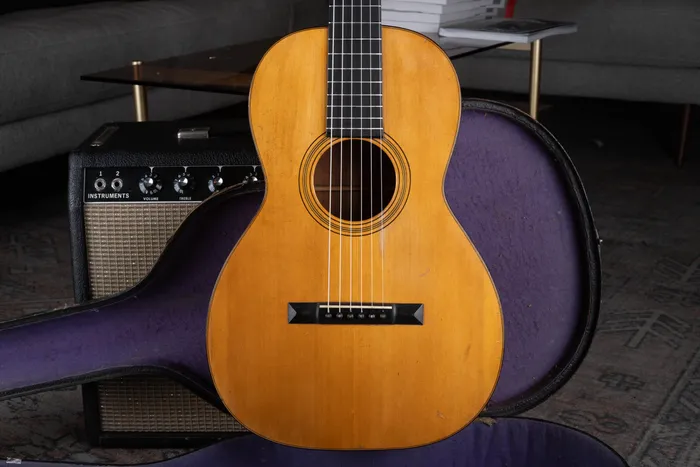
A detailed collector’s guide to Martin 0, 00, and 000 guitars, including body sizes, 12-fret and 14-fret construction, woods, trim, bracing, tuners, authentication, and the eras collectors value most.
Read more →
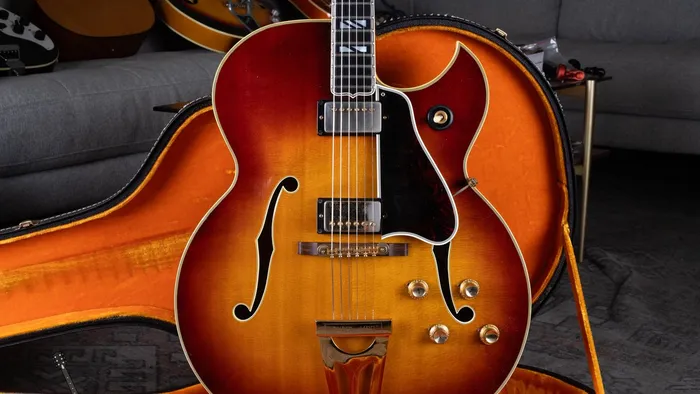
The Super 400 is Gibson's 18 inch carved archtop, named for its $400 list in 1934. The Super 400 CES followed in 1951. Here is how to date one from the cutaway, pickups, label, and our Kalamazoo shipping totals, plus 2026 dealer value as ranges. Shown on a 1938 Super 400, a 1957 CES, a 1964 Florentine CES, a 1969 acoustic, a Custom Shop thinline, and a 1990s black Super 400.
Read more →
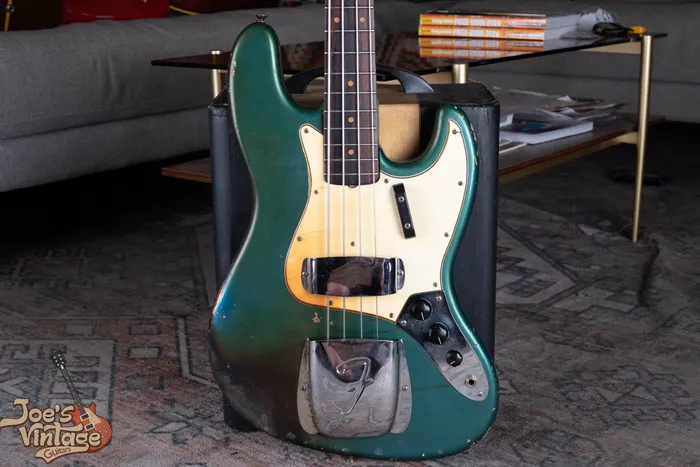
The stack knob years, the bound-dot window, and the 1970s bridge pickup move. Every dating change on the vintage Fender Jazz Bass from the 1960 launch to 1975, and why the headstock logo will not tell you whether yours is pre-CBS.
Read more →
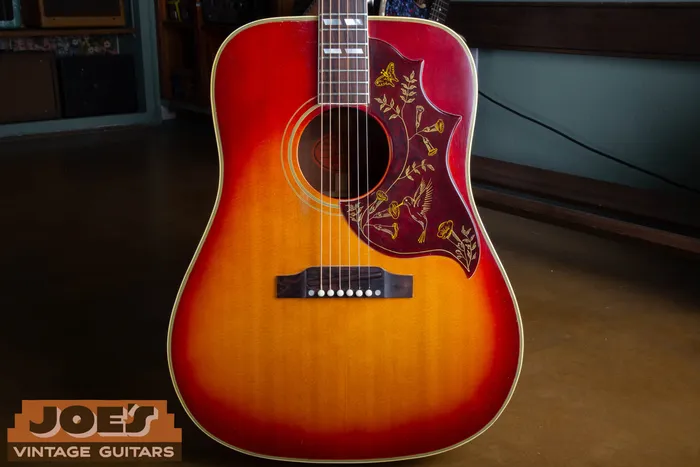
The Hummingbird was Gibson's first square shoulder dreadnought and the prettiest guitar in the 1960 catalog. Here is the full story: what the first ones were, every spec change that matters through the 1970s, how to date yours from the label and the hardware, and what a vintage one is honestly worth in 2026. Shown on five real Hummingbirds that came through the shop, from a 1961 to a 1979.
Read more →
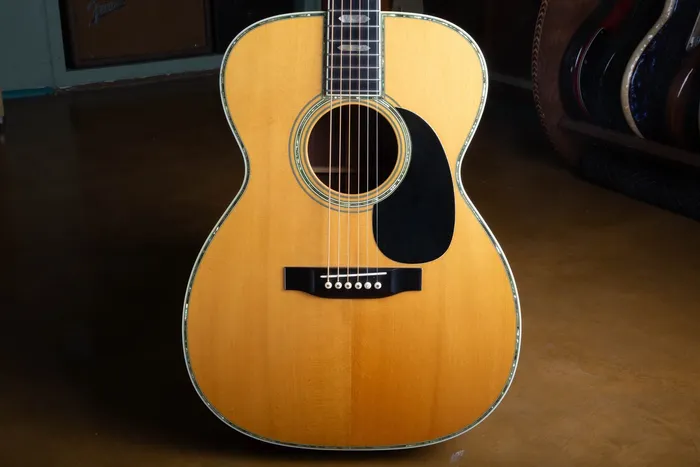
The 000-45 is the rarest thing Martin puts a catalog number on. Just 341 were built across the whole span from 1906 to 2005, post-1970 reissues included, and in the 1970s the factory made them one and two at a time. Here is the full spec sheet for a 1976 example, the history of how Style 45 came back after the war, how to tell an original from an upgraded 000-28, and what one is honestly worth today.
Read more →
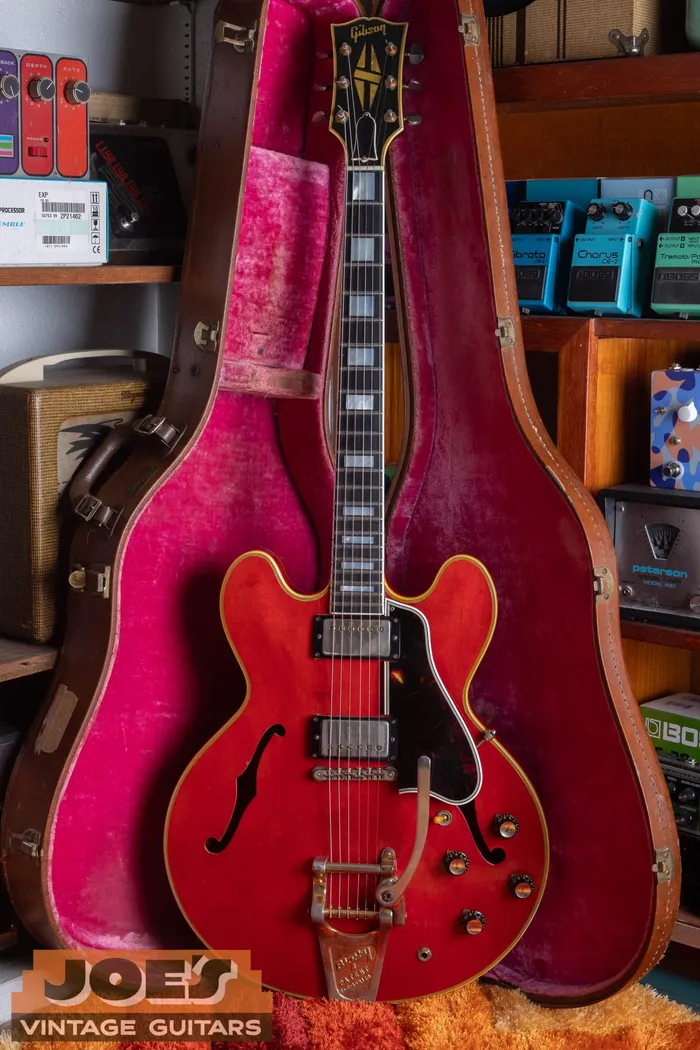
The ES-355 was the top of Gibson's thinline family, a cherry-red, gold-plated flagship that sat above the ES-335 and ES-345. This guide covers where it came from, how the mono ES-355TD and the stereo Vari-tone ES-355TD-SV differ, how we date and authenticate a 1959, and what one is really worth today, including the surprise that a fancy 355 usually sells for less than a plain 335 dot-neck. Every photo is a real 1959 ES-355 from our shop.
Read more →
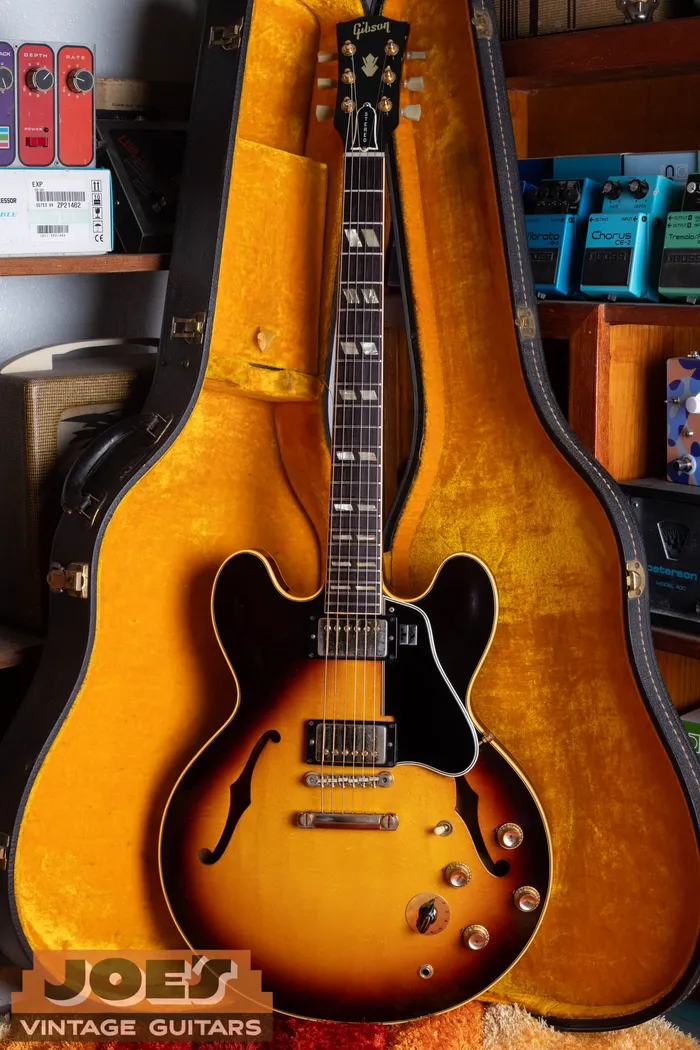
The Gibson ES-345 added stereo wiring and the six-position Varitone to the ES line in 1959, sitting between the ES-335 and the ES-355. This guide covers the history, the specs, the year-by-year authentication tells, and what a vintage ES-345 is really worth, shown on a 1963 sunburst and a 1966 cherry from the shop.
Read more →
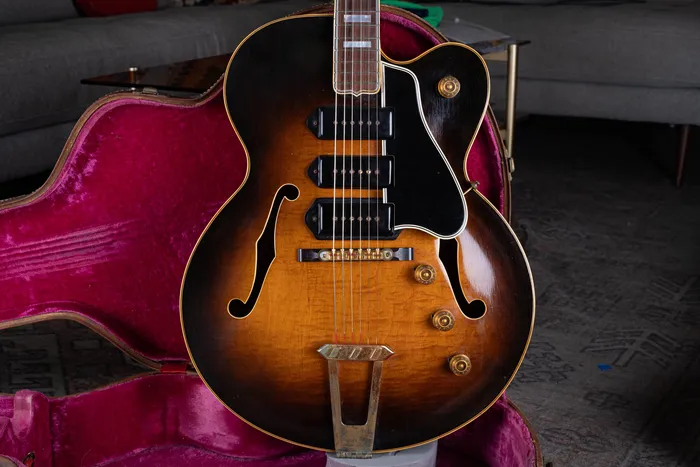
The Gibson ES-5 was the first production Spanish electric with three pickups, a plush cousin of the L-5 that Gibson sold as the instrument of a thousand voices. This guide covers where it came from, how the original three-P-90 ES-5 became the four-way ES-5 Switchmaster, how the Switchmaster moved to three PAF humbuckers, and how we date, authenticate, and value each one. Every photo is a real ES-5 from our shop, including a 1953 original and a 1958 PAF Switchmaster.
Read more →
Have a vintage guitar to sell or a question? I’m here to help.